
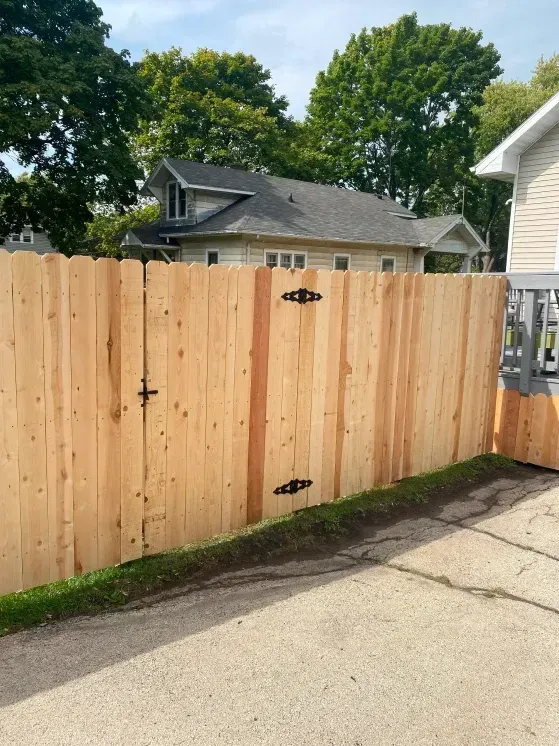
Access Points Built for Repeated Daily Use
Gate Installation in Appleton for controlled property access requiring smooth operation and reinforced support
Gates installed without reinforced posts sag within months, latches misalign after seasonal ground shifts, and hinges bind when hardware bears loads beyond design capacity. Proper gate installation addresses these failures by using oversized steel support posts, concrete footings deeper than standard fence posts, and hardware rated for the gate's weight and swing width. Vargas Quality Fencing installs manual and automatic gates across residential, agricultural, and commercial properties in Appleton, integrating access points into wood, vinyl, chain-link, ornamental, and agricultural fencing systems. Every gate receives galvanized steel support posts set in concrete below the frost line, preventing the settling and lean that causes operational problems after the first winter.
Gate installation begins with determining swing direction based on slope, traffic patterns, and clearance around existing structures like mailboxes or utility boxes. Posts are positioned to allow the gate to swing freely without dragging across uneven ground, and hinges are mounted at heights that distribute weight evenly. Automatic gate operators require electrical runs and sensor placement coordinated with driveway approach angles and safety clearances.
Request a free gate installation consultation to review access requirements and hardware options suited to your fencing system and site conditions.
What Reinforced Support Posts Prevent Over Time
Standard fence posts flex under the lateral force generated every time a gate swings open or closed, and this repeated stress gradually loosens post footings and shifts hardware out of alignment. Reinforced steel posts sized larger than fence line posts resist this movement, and concrete footings extending below frost depth prevent heaving that throws latch alignment off by inches. Gates handling farm equipment, delivery vehicles, or daily residential use all benefit from support structures engineered for the specific load and frequency of operation rather than generic fence post sizing.
After installation completes, gates swing smoothly without binding at hinges, latches engage without forcing, and automatic operators cycle open and close without hesitation or sensor errors. Posts remain plumb through freeze-thaw cycles, and hardware maintains alignment even after years of repeated use. Owner-supervised installations include customer walkthroughs to confirm operation meets expectations before the crew finalizes hardware adjustments and cleans the work area.
Gate compatibility with existing fencing depends on matching panel height, material finish, and structural load—wood gates mount to wood fence posts using through-bolted hardware, while ornamental gates require welded brackets or bolt-on hinges designed for metal-to-metal connections. Automatic operators add convenience for driveways with steep approaches or properties where manual operation becomes difficult during winter conditions.
What to Know Before Installing New Gates
Gate performance depends on proper support structures, hardware selection, and installation precision, so understanding these factors helps set realistic expectations.
What size posts are required for gates wider than four feet?
Gates exceeding four feet in width generate significant lateral force during operation and require steel posts with larger diameter and deeper concrete footings than standard fence posts to prevent sagging and hinge misalignment over time.
How do automatic gate operators handle Wisconsin winter conditions?
Automatic operators use low-temperature-rated motors and sealed control boxes to function through freezing weather, and sensors are positioned to avoid snow accumulation that triggers false obstruction readings during winter months in Appleton.
When should double gates be used instead of single-swing designs?
Double gates suit wide driveways or equipment access points where a single gate would require excessive swing clearance or create a panel too heavy for hinges to support without sagging under its own weight.
What hardware differences affect gate longevity?
Galvanized or stainless steel hinges and latches resist corrosion from moisture and road salt exposure, while standard hardware develops rust that binds moving parts and weakens mounting points within a few years of installation.
How are gates integrated into existing fence lines?
Gate installation requires removing fence sections to position support posts, then reconnecting adjacent panels to the gate posts using brackets or rail extensions that maintain consistent height and alignment with the original fence run.
Dependable craftsmanship and attention to long-term functionality ensure gates operate smoothly for years without requiring hinge replacement or post realignment. Vargas Quality Fencing provides owner-supervised gate installations with customer walkthroughs to confirm final performance before project completion.